Address
304 North Cardinal
St. Dorchester Center, MA 02124
Work Hours
Monday to Friday: 7AM - 7PM
Weekend: 10AM - 5PM
Address
304 North Cardinal
St. Dorchester Center, MA 02124
Work Hours
Monday to Friday: 7AM - 7PM
Weekend: 10AM - 5PM
Price range: $13.95 through $18.95
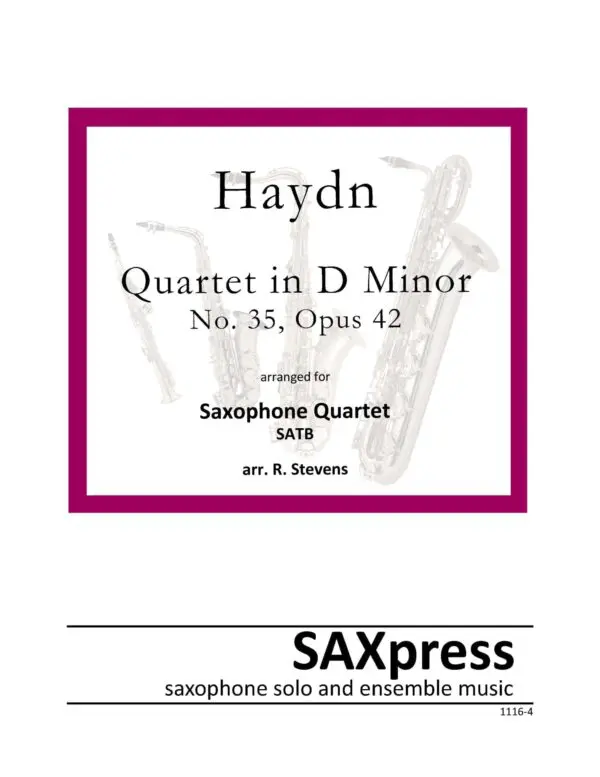
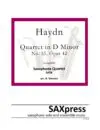
Composer: Haydn, Franz Joseph
Arranger: R. Stevens
Ensemble: Saxophone Quartet SATB
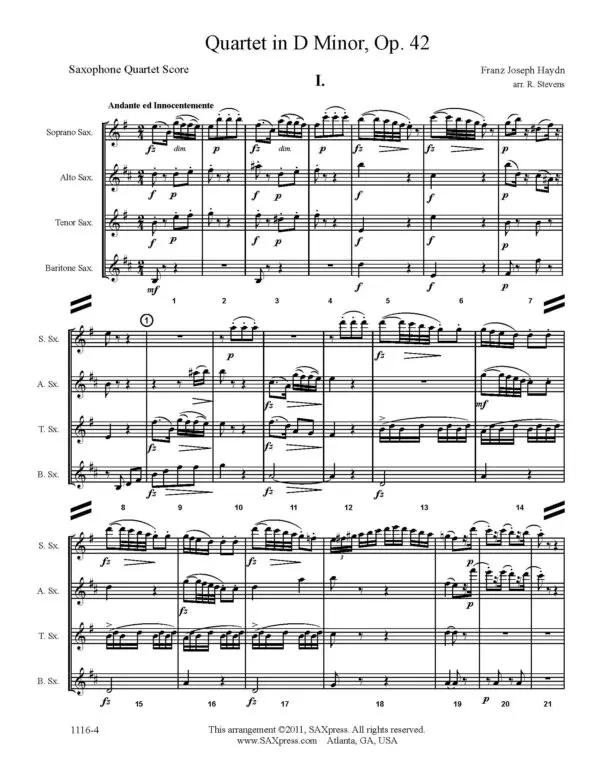
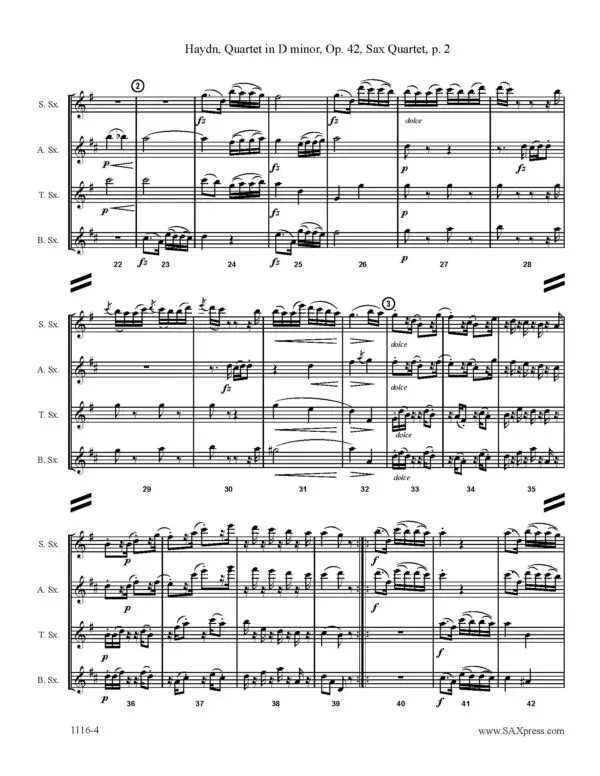
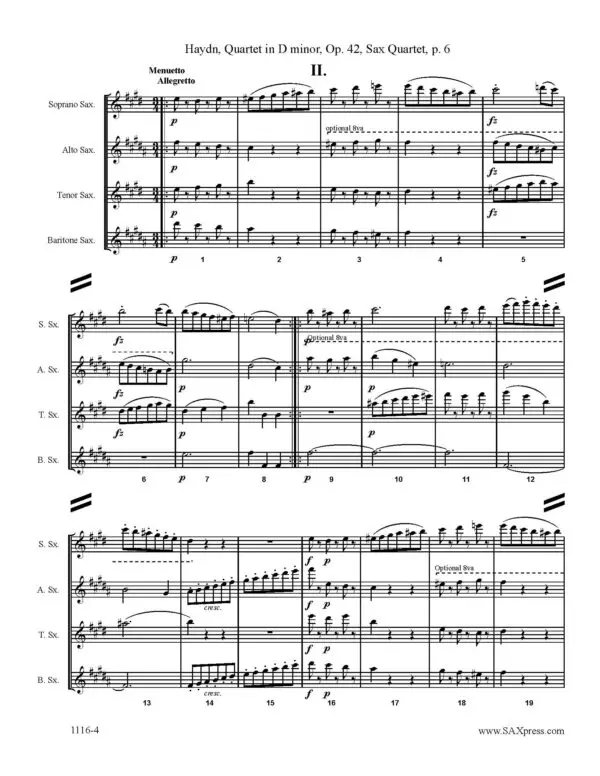
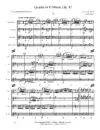
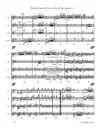
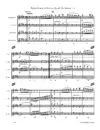
Format: Score (15 pp) and SATB parts
Length: 15-16 minutes (4 Movements, all repeats)
Difficulty: Grade 6 (Advanced)
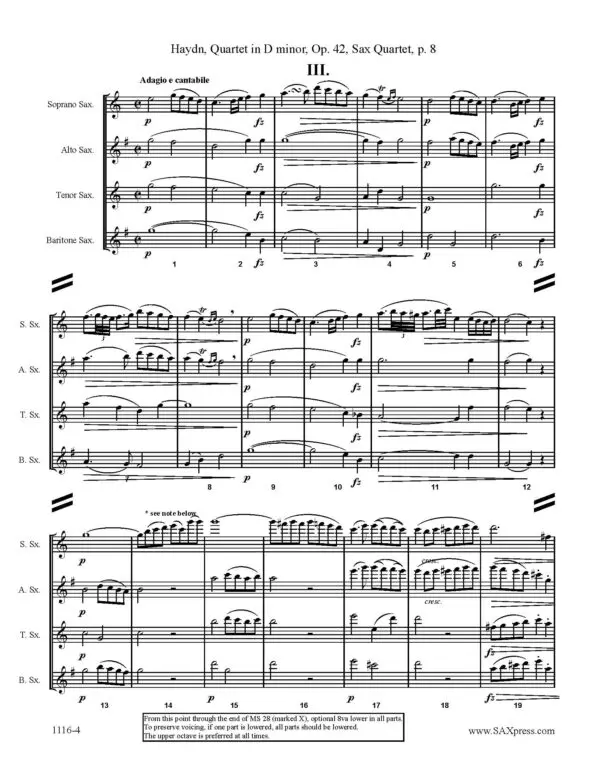
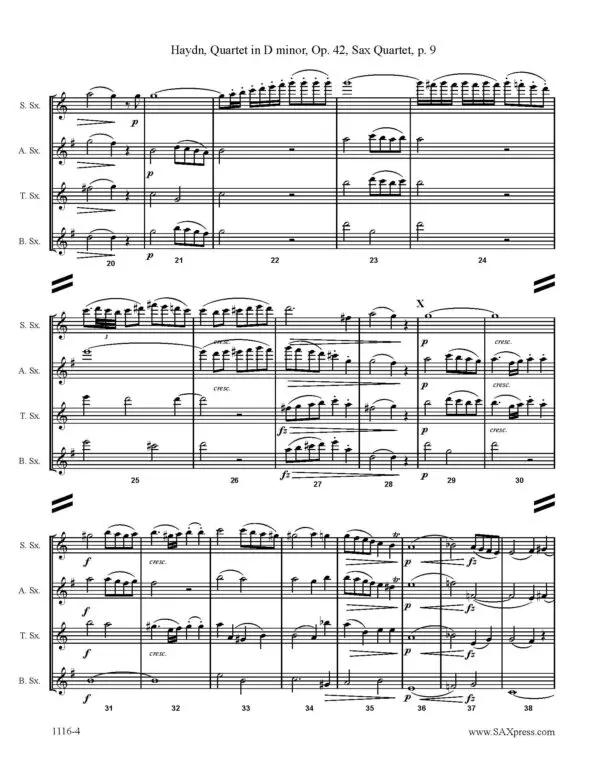
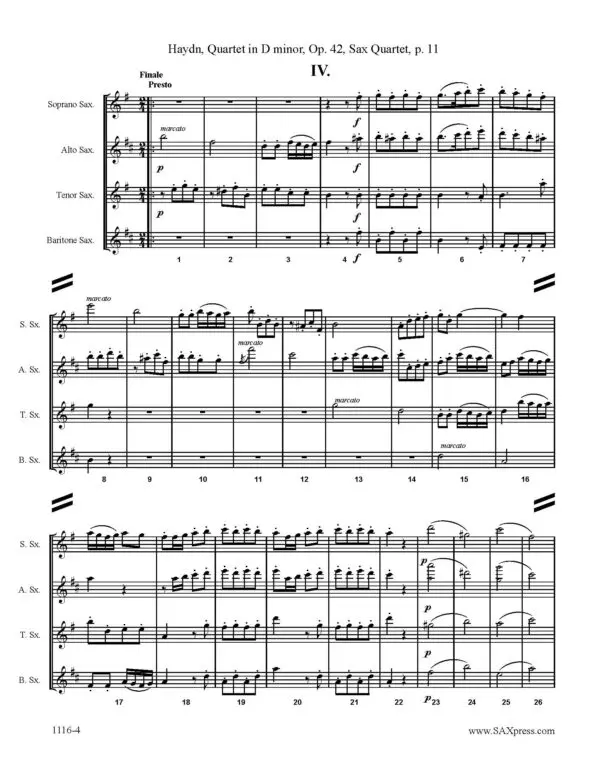
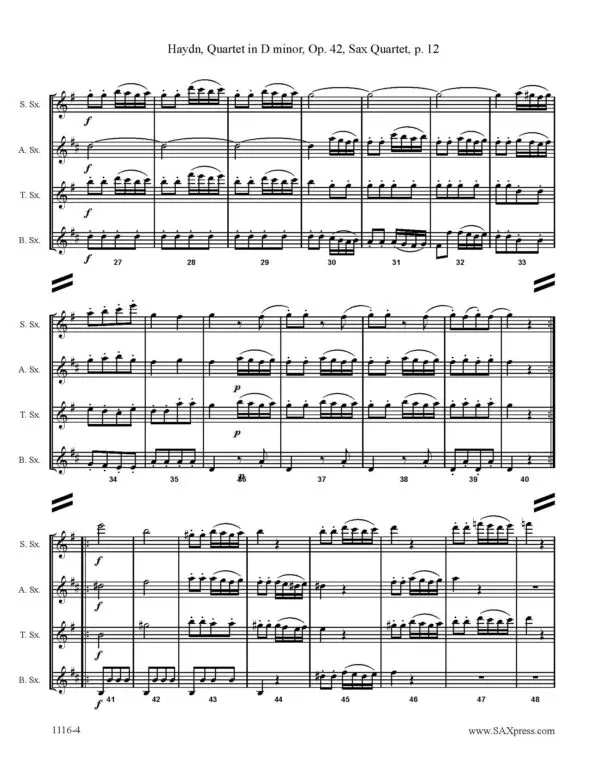
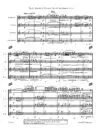
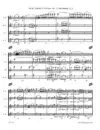
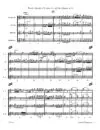
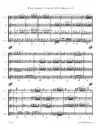
Quartet 35 in D minor, Op. 42, by Franz Joseph Haydn, string quartet transcription for SATB saxophone quartet. Haydn spent much of his career as a court musician for the wealthy Esterházy family on their remote estate. Isolated from other composers and trends in music until the later part of his long life, he was, as he put it, “forced to become original”. That originality is evident in the D minor Quartet, String Quartet 35 in D minor, Op. 42, H. 3/43
Printed in 1786, the Op. 42 D minor string quartet is not part of a series like Haydn’s other quartets but stands alone. It is unusual in this and many other respects. It is written in sonata di chiesa format, opening with a serious slow movement full of profound gesture. A brief Minuet and Trio offers relief from the dark mood of the first movement. The Andante Cantabile of the third movement features an extended aria-like melody in the first part. It provides a welcome contrast to the intense fugato of the finale. The ending is somewhat abrupt and subdued.
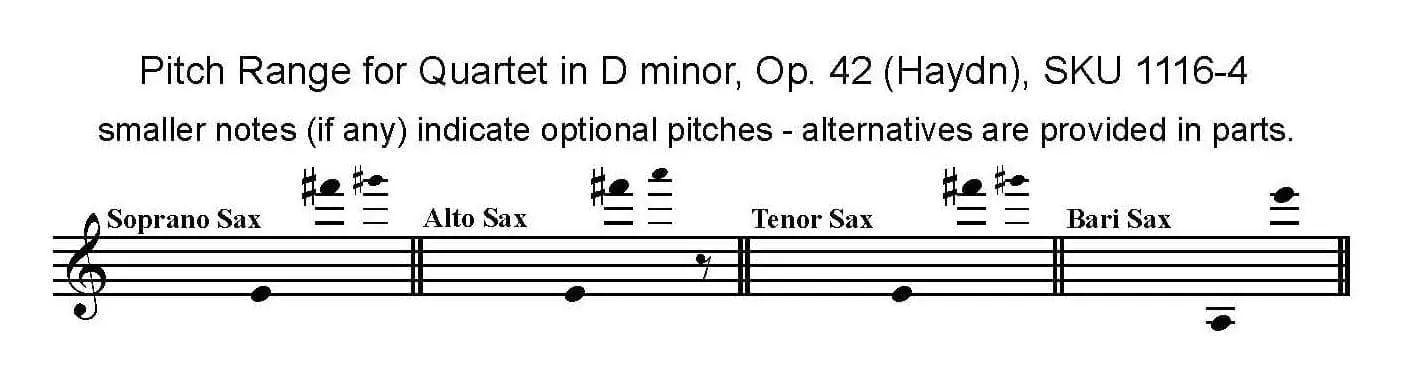
This string quartet transcription presents the music as Haydn wrote it. Nothing is omitted or altered. The third movement is famous for its extended range. Altissimo is required of Soprano, Alto, and Tenor players with alternate notes given where necessary and octave transpositions provided if required.
View all the string quartet transcriptions available from SAXpress.
Printed in 1786, the Op. 42 D minor string quartet is not part of a series like Haydn’s other quartets but stands alone. It is unusual in this and many other respects. It is written in a sonata di chiesa format, opening with a serious slow movement full of profound gesture. A brief Minuet and Trio offers relief from the dark mood of the first movement. The Andante Cantabile of the third movement features an extended aria-like melody in the first part. It provides a welcome contrast to the intense fugato of the finale.
Altissimo required of Soprano, Alto, and Tenor players with alternate notes and octave transpositions provided if required.





Reviews
There are no reviews yet.