Address
304 North Cardinal
St. Dorchester Center, MA 02124
Work Hours
Monday to Friday: 7AM - 7PM
Weekend: 10AM - 5PM
Address
304 North Cardinal
St. Dorchester Center, MA 02124
Work Hours
Monday to Friday: 7AM - 7PM
Weekend: 10AM - 5PM
Price range: $10.95 through $18.95
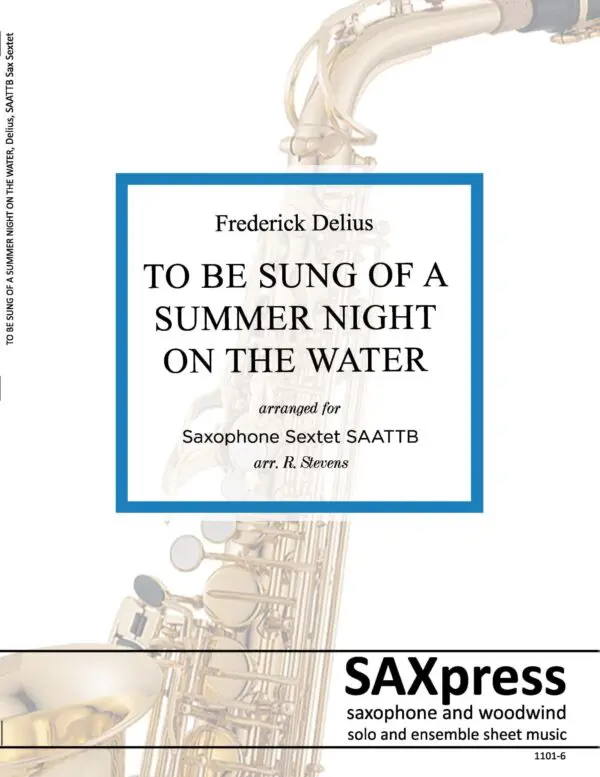
Two Part-Songs, (1917)
Composer: Delius, Frederick
Arranger: R. Stevens
Ensemble: Saxophone Sextet SAATTB
Format: Score (4pp) and parts
Difficulty: 2.5 – 3.5 (easy)
Length: 4 minutes
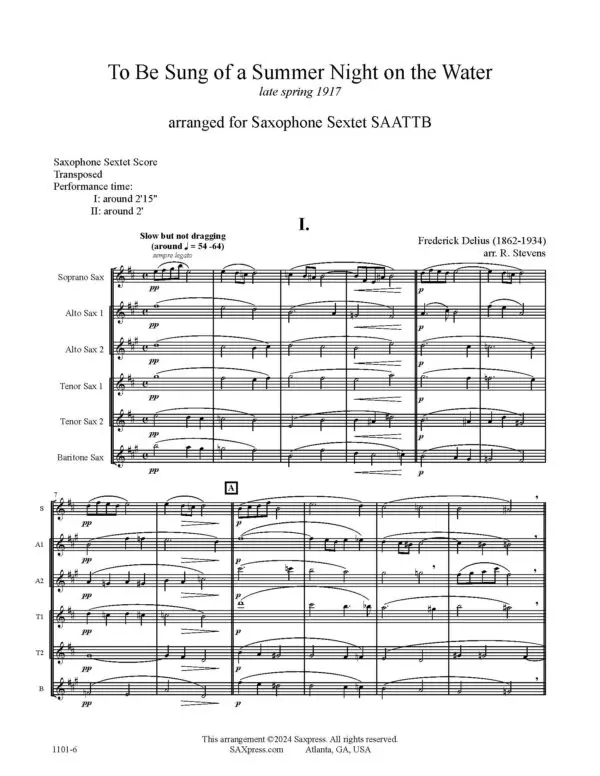
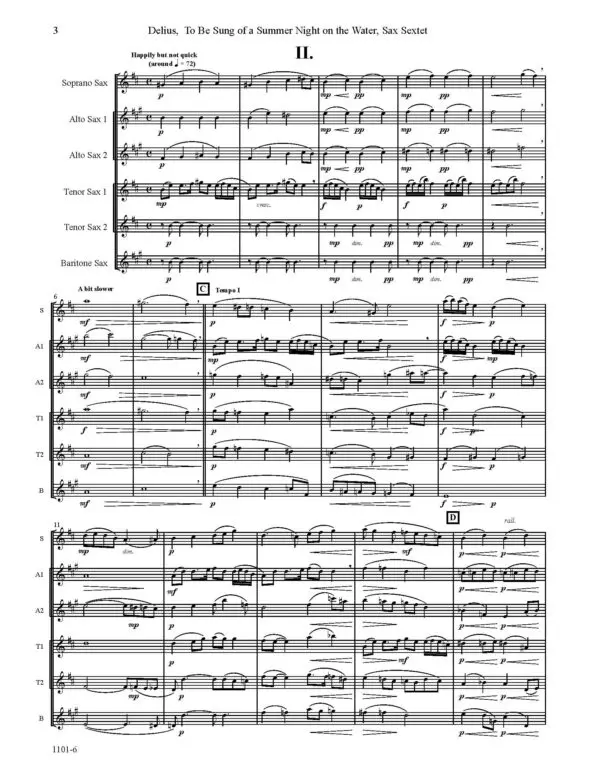
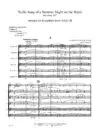
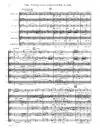
To Be Sung of a Summer Night on the Water by Frederick Delius, arranged for saxophone sextet. Delius wrote this originally as a wordless choral work. There are two short sections. The first is a dreamy idyll with rich chromaticism and gentle lines that convey an ethereal, bucolic quality. The second section is a bouncy, nonchalant tune that will very likely get stuck in your head as an earworm if you let it. The tune is passed back and forth between the tenor 1 and the alto 1 parts. The piece was later set for string orchestra. This arrangement is for saxophone sextet, SAATTB. It is not technically difficult; instead, this piece is an exercise in dynamics and phrasing.
The range for each saxophone part is shown below.
Audio and score excerpts are available above.

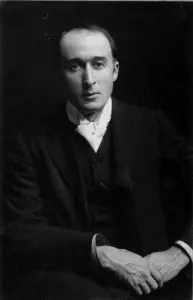 Frederick Theodore Albert Delius CH (born Fritz Theodor Albert Delius (29 January 1862 – 10 June 1934) was an English composer. Born in Bradford in the north of England to a prosperous mercantile family, he resisted attempts to recruit him to commerce. At first his parents did not want him to study music, so he was sent off to Florida to manage an orange plantation. He abandoned his duties and found a music teacher. Later he returned to Europe, studied music, and settled in France for the rest of his life. His music is often quite gentle and atmospheric, with chords that shift about in unusual ways. In his last years he was very ill, but he still wanted to compose, so he dictated his music to an assistant, Eric Fenby.
Delius’s early compositions reflected the music he had heard in America and the influences of European composers such as Grieg and Wagner. Later he developed a style uniquely his own, characterized by his individual orchestration and his use of chromatic harmony. Delius’s music has been only intermittently popular, and often subject to critical attacks. The Delius Society, formed in 1962 by his more dedicated followers, continues to promote knowledge of the composer’s life and works, and sponsors the annual Delius Prize competition for young musicians.




Reviews
There are no reviews yet.