Address
304 North Cardinal
St. Dorchester Center, MA 02124
Work Hours
Monday to Friday: 7AM - 7PM
Weekend: 10AM - 5PM
Address
304 North Cardinal
St. Dorchester Center, MA 02124
Work Hours
Monday to Friday: 7AM - 7PM
Weekend: 10AM - 5PM
Price range: $18.95 through $22.95
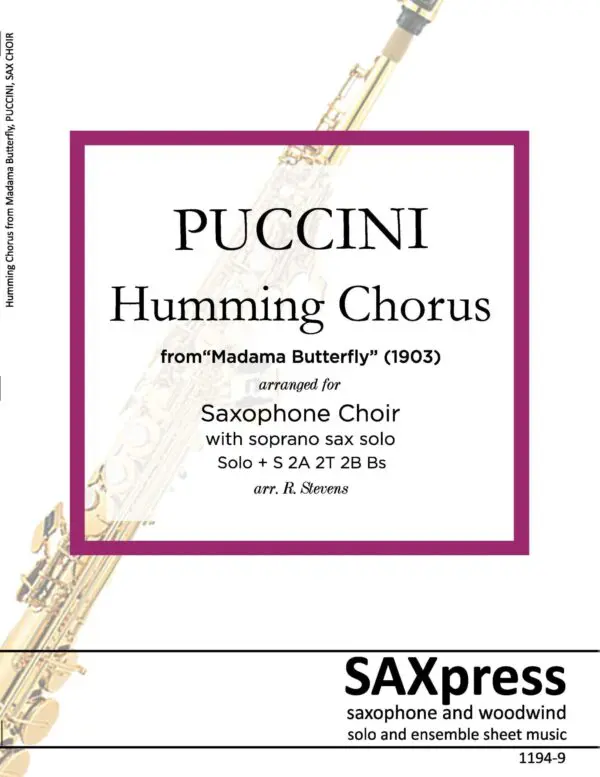
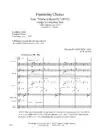
Composer: Giacomo Puccini
Arranger: R. Stevens
Ensemble: Saxophone Choir SAATTBBBs + S or A or T solo
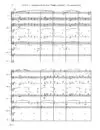
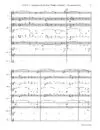
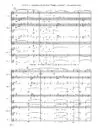
Format Full Score (12 pp), Parts (11 @ 1 pp ). 8.5 x 11
Length: ca. 2.25 minutes
Difficulty: Grade 3-4 (Moderate)
The famous Humming Chorus from Madama Butterfly by Giacomo Puccini. This arrangement is for soprano sax solo with saxophone choir. Additional solo parts for alto sax and tenor sax are included. It is suggested that the additional solo parts be used when playing with a very large sax ensemble. The arrangement can be played in a smaller setting utilizing only one solo part (soprano, alto, or tenor) and SAATTB ensemble. Bari 2 and Bass Sax are optional.
The premiere of Madama Butterfly was a complete fiasco. It was called “one of the most terrible flops in Italian opera history”. The opera has been criticized by some American intellectuals for orientalism. Despite these opinions, Madama Butterfly has been frequently performed in Japan in various adaptions from 1914 to great acclaim.
Today Madama Butterfly is the sixth most performed opera in the world and considered a masterwork. The “Humming Chorus” is the transition from act 2 to act 3.
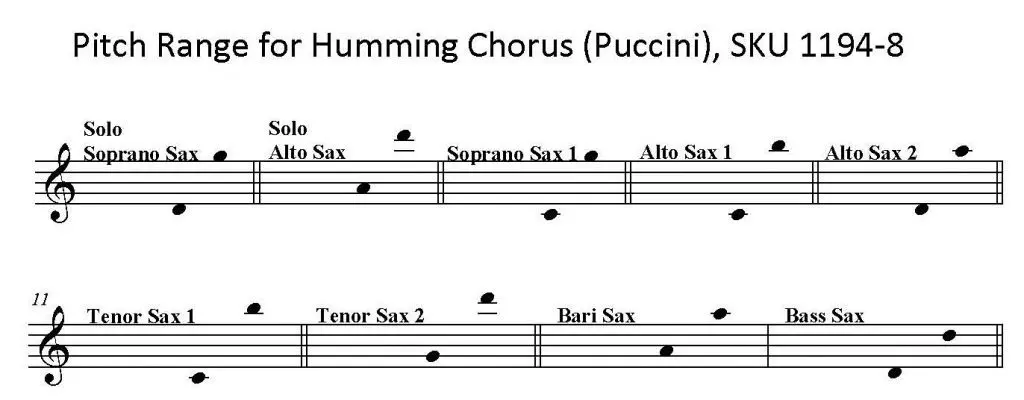
The range for each saxophone part is illustrated below.
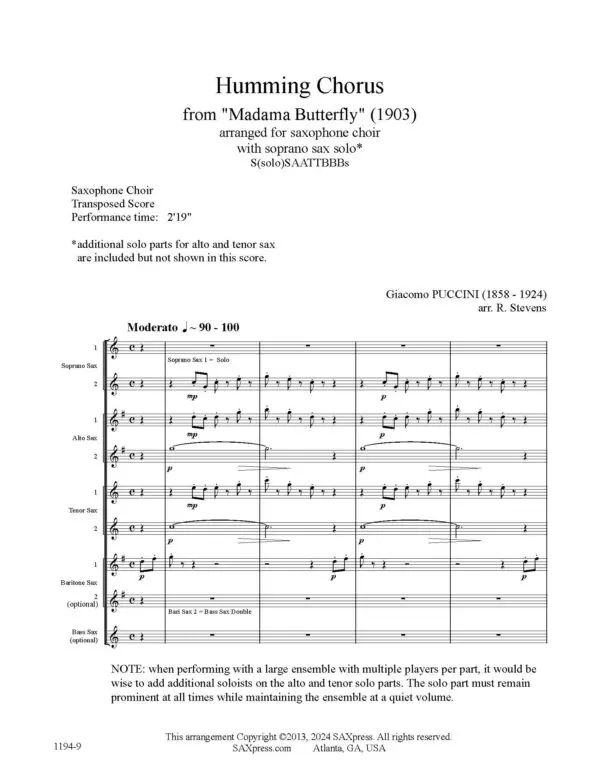
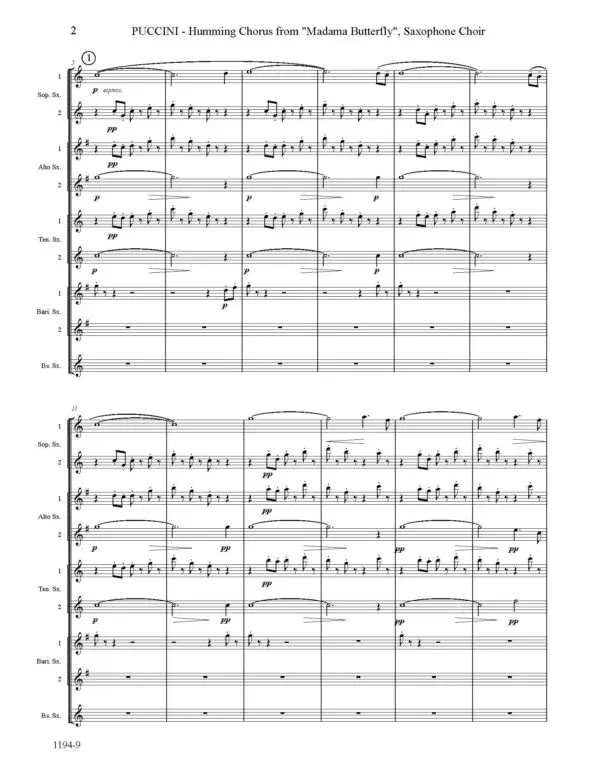
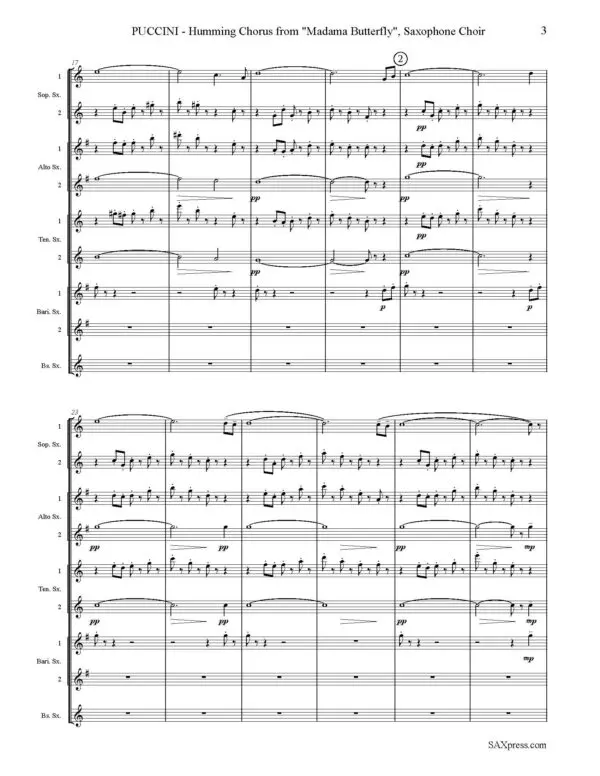
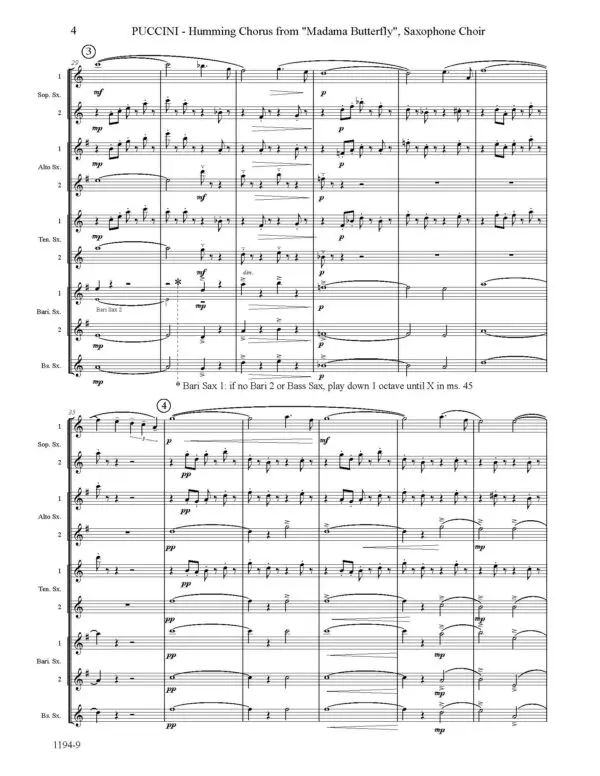
A score excerpt and audio sample are available above.
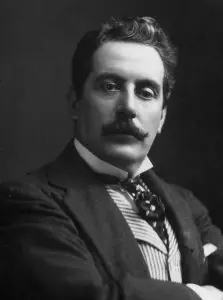 Giacomo Puccini (22 December 1858 – 29 November 1924) was an Italian composer known primarily for his operas. He is regarded as the greatest and most successful proponent of Italian opera after Verdi. Though his early work was firmly rooted in traditional late-19th-century Romantic Italian opera, he later developed his work in the realistic verismo style, of which he became one of the leading exponents.
His most renowned works are La bohème (1896), Tosca (1900), Madama Butterfly (1904), and Turandot (1924), all of which are among the most frequently performed and recorded of all operas.




Reviews
There are no reviews yet.